Google
 

Sunday, 22 July 2007

SXR270 - day 2

Its day two on SXR270 - the day we get to do some real lab work.
It starts early. One of the discoveries at about 6am is how much a closing door echoes around the halls of residence. It appears we have an early riser in our block, so most of us awoke at around 6, and then tried to snooze in to a more reasonable hour.

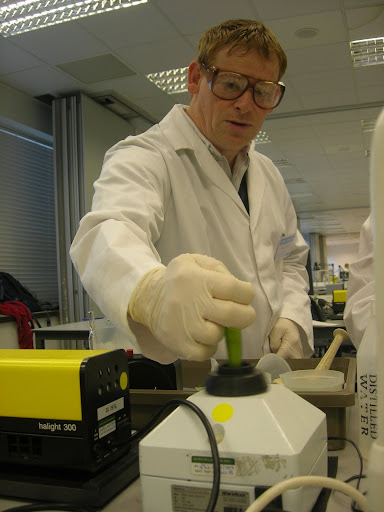
After breakfast and a walk down to the QMC, we find our lab. Here Penny takes us through a pilot experiment that allows us to measure the oxygen update of a small piece of liver. This part is all about learning how to use the equipment, getting the procedure right, and learning how to interpret the results. The procedures are not too bad really - the data is all recorded on a computer which draws a graph of oxygen levels.

We basically leave it to respire for a while until it has used up all its glucose supply. Then we add some glucose solution which kicks off the respiration again. Then a bit later we give it a metabolic poison - potassium cyanide, which tends to stop it in its tracks.

That takes up the morning, together with some data analysis.

In the afternoon we start designing our own experiment. We chose to do rat skeletal muscle compared to rat skin. We figured the skin has very little metabolic activity and the muscle a fair bit. As it turned out the results weren't that different, although it was significant after running 5 replicates of each. Muscle really only uses oxygen quickly when its working, and this bit of muscle was just sitting around in a warm bath of buffer solution.

We spent a while interpreting our results and trying to work out if they were significant. We didn't have enough data for a t-test so we had to just compare things on a graph.

It looked ok, and we think we can make a convincing presentation of it in the 5 minute spot tomorrow.

After tea, we had more briefings and tutorials, which covered presenting the work tomorrow and what we shall be doing tomorrow in the experimental work in the morning. We get to meet a manduca hornworm catepillar and various bits of its guts.
We then proceed to see what its doing with potassium ions.

However that's another day, and tonight we have a quiz team to put together and win a quiz - or failing that at least not embarass ourselves too much!

Well what can I say? Our combined knowledge of cars seems to have been lacking, we didn't know who was the most popular children's author (no - we thought JK too - but its Beatrix Potter). It also took quite a while - we got there at 9:30, there were 30 questions and it didn't finish until nearly midnight. This is after we'd talked Cate into attending with the line "Well how long can it last?". Even Marks mobile phone tune I.D. gizmo didn't help. Still it was a good evening for getting to know people.

Saturday, 21 July 2007

SXR270 - day1

Its daaaay 1 in the SXR270 residential house.

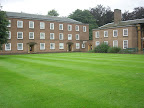
I arrived at about 11:30 and got myself registered. The family had come with me to see what it was like. It was all a bit weird. I was in Cripps Hall where I spent 3 years as an undergraduate. What's more, I'm in D-block, which was where I lived, and I was almost in the same room!
Things haven't changed much in the past 20 or so years either. The rooms look the same, the doors now have keycodes on the outside but otherwise it all looked very familiar.

We decided to take lunch in the dinning hall at Cripps and that hadn't changed much either!
Even the bar looked much the same, though it now had TV's in it.

After the family left, I had a little time to get my bearings and a cup of coffee then it was off to the medical school, a 10-15 min walk to have the introductory briefing. After that we went with our group and activity tutors to the lab we would be starting in. The group was spilt into two so we had a group tutor each - Rachel for us. We also gained a second dot at this point to distinguish the two subgroups. After we'd had a few things explained we had to introduce ourselves and get to know out colleagues a bit.

Then back to hall for tea.

After tea, we had a briefing on experiments, hypotheses and then on energy production and experimental procedure. It all went pretty well and the S204 material really helped understand the details. So tomorrow we are going to look at ATP production in various cell types and see if we can tell the difference between ATP production in muscle and skin based on oxygen consumption.

Retire to the bar for a drink or two and a bit of socialising. Day finished!

Thursday, 19 July 2007

SXR103 revisited

I had such a good time at SXR103 in 2006, it seemed a shame that you couldn't do it all over again. However after I'd written my diary, and the Open University had used it for their web site, I inquired what it took to become a tutor. It seems you need a degree in a relevant field (OK - I have one), a lot of enthusiasm, a sense of humour, and some teaching experience.
Well I didn't really have the latter, but I hoped I would have enough of the former to be considered, so I put in an application to be a tutor at the beginning of the year. You have to apply each year as the time comes around.

I thought nothing more of it, and approached it with a sense of "Nothing ventured, Nothing gained". What's the worst they could do?

Some months later, when I had completely forgotten about the application, I received a note in the post, saying I was allocated to the reserve list for a week at Sussex University and for this I would get a small fee. I was quite pleased, I mean at least they were willing to consider me, and that I wasn't beyond the pale! It did come as a slight surprise as I'd already heard other people on the bulletin board telling students that they would be tutoring for this week or that, so I assumed it was all past.

I talked to the people at work, and ended up booking the requisite week off, just in case, so I would be able to go. If nothing came of it, I'd just go to work as normal.

The day crept ever closer, and I heard nothing further, and then finally it was the start of "my" week. It was a long shot, one of the existing tutors falling ill of having problems for that week, so I wasn't really surprised I heard nothing.

Tea time on the Saturday and just getting tea ready with my wife for the children, and the phone rang. It was a number I'd not seen before - so probably a double glazing salesman. But no, it was Dianne the course director for the week. A tutor had to go home, could I get there for tomorrow and tutor activity A? To say I was shocked was an understatement. The words wind-up did come to mind. I said I thought I could make it, and hung up in a daze.

The rest of the night was a bit of a blur. I looked out my last years course stuff, got some clothes together. I tried to remember what the tutors dressed in - I was hoping smartish jeans and t-shirt would be ok as I'd be wearing a lab coat when on duty. Dianne had said I'd get a briefing from the senior tutor on the Monday, where I could ask questions. I assumed as I was covering that the other tutors would be doing the main work, and I'd be an assistant to help out.

Sunday

I left Nottingham at about midday, and immediately got caught in traffic leaving the city where there were some major roadworks. Fuming slightly, I sat in a jam for about 45 minutes where they were repairing a bridge. Once I got past that, I got onto the motorway, and the rest of the journey was OK, if a little long. I managed to get to Sussex University for about 4:30, parked, and after following signs here and there posted around managed to find the OU offices. They had a badge ready for me, a room and some papers to sign. I then went and found my room and at just after 5, went to the course directors office to meet up with Dianne and the rest of the tutors. It was slightly nerve racking meeting so many people, and I was glad of the name badges as names are not my strong point. I joined in the debriefing session for the days activity and was introduced to all.

I talked to Andy a bit, the senior tutor of activity A, and we agreed to meet up at 10:00 the following morning in the lab to just go over the experiment. Dianne then asked me if I had any tutorials I would like to give in the evenings. I hadn't really expected that, but I said I'd think about it (feverishly thinking I had no overheads, no computer and no ideas!). Andy mentioned over tea he was running a Maths help workshop/tutorial which I could help with.

We went to get some tea, and I thought a bit more on the tutorials. I suddenly thought I could write one on how life began almost from memory if I could get a computer. I went to see Barbara in the office to ask if there were any available computers. She took me over to the Pevensey building and gave me a login for one of them. I set to work. Luckily I had my pen drive in my pocket, and whilst browsing through it, found a powerpoint for an evolution talk I'd given a few months ago. Just the thing! It also had a collection of notes on it for the beginning of life I'd written last year. Things were really looking up. I made some adjustments to the evolution for the current audience, and roughed out a plan for the other one.

After I came out I ran almost immediately into Dianne and Barbara, so I told them I had two talks for them. Dianne said I'd do better with a more interesting title, so I changed it from evolution to "From Monkeys to Men" but stuck with the other one.

It was quiz night, and I joined an illegal tutors team (tutors weren't suppose to form teams with each other!). We all agreed it was a bit dire as quiz's go, but it helped me meet up with some of the tutors and get a bit more into the spirit of the thing. They turned out to be a really nice bunch of people.

Monday

Next morning I read through the tutor notes for the activity, and read my old copy of activity A worksheet. I called in on the computers on my way to the lab and did a bit more on the tutorials.
I arrived at the lab early and re-familiarised myself with the equipment. Andy came in and we went through a few things. I watched a safety video and played around a bit with the experiment.

The rest of the day I was notionally helping out with Activity-E, but there were few questions and I managed to do a fair bit on my tutorials. Tea and then the bar after sitting in on a couple of tutorials. When the bar shut at about 11, Diane lead us to another bar which was open until 1am, where we talked into the night.

Tuesday

I woke early on Tuesday, despite the rather late night. Had breakfast then went to the lab early to have a final run through. Andy asked me what I'd like to do as far as demonstrations and briefings. I agreed to do the 2nd experimental briefing so I had time to watch carefully what he did.
The morning session went pretty well - I was quick to admit my ignorance about rocks when pushed beyond the material that was provided in the notes and what I knew form S103. Usually this was a quick call to Nick who had a ready answer. I was quite relaxed by the time we got to lunch.

After lunch I watched carefully the demonstration to half the group, then repeated it later to the 2nd half with a few of my own additions. I forgot a couple of minor bits but it went ok. Nick told me I probably needed to speak a little louder.

I was more confident in the afternoon as I was fairly sure I could answer any tricky questions on physics. Andy suggested tomorrow I could do the final briefing, so I watched that carefully too.
My the end of the day my feet were hurting a little. There is no chance to sit down during the labs as you make a round of the students helping out.

The rest of the lab went well and we had all finished by 5ish. We went off to the tutors debrief and then to Tea. I attended a tutorial, and then gave one of my own - about 5-6 people attended. I think it went ok. A night in the slopes bar followed, but only until 11.

Wednesday

Another early start, breakfast and lab. This time I was more confident on the geology, and sailed through the morning mostly. I did the 2nd demonstration again, and finished the day with a debriefing session which is rather dry material and rather maths heavy for that time of the day.
I don't think that went too well - if I did this session another year, I think I would write my own slides.

After tea I went to help Andy out with a maths problem class - which with about 11 people present it was just as well, and then to a drugs tutorial.
An evening in the slopes bar, followed by another night in the 1am bar! I can't remember much of it, except Nick was really on form, and my cheeks hurt from laughing the following morning.

Thursday

Much like Wednesday really, but it went a little more smoothly for me. I knew what I was doing by now and could also keep an eye on students progress with respect to time.

After tea it was time for my other tutorial, which went pretty well too. After that it was back to the tutors room to have a few drinks before entry to the disco at about 11pm. We stayed there until it finished at 2am, and then one of the tutors who had not been drinking insisted we find a room and drink some wine. She disappeared after a whip-round to the local all-night ASDA and we found a quiet room to sit and drink until 4am.

Friday

I still woke at about 7:30, despite the short night. In breakfast the rest gradually filtered in. Us activity tutors were now finished, so we said our good byes after breakfast.

I drove out of the campus, but my adventure was not over. Just as I got onto the main road, I found all was not right with the car, and pulled over. Just as I stopped one of the front tyres burst. It appears part of the suspension had somehow broken and dug into the inside wall of the tyre. So I had to call a recovery service, and get home on the train.

However - despite this rather miserable ending, I think I may be applying to teach again next year. Its every bit as much fun as doing the course.

Saturday, 7 July 2007

S204: TMA-4

Time to approach TMA-4. I must say the first time I looked at this it looked like gibberish! The essay question didn't look too bad, but the second question seemed impossible.

Q1

Write a report in which you discuss the statement ‘Extremophiles are only psychrophiles or thermophiles’ of 1200 words.

For this you have the books, but also a scientific paper was included attached to the question which summarised some of the different extremophiles. Extremophiles are organisms that live in extreme environments, psychrophiles being ones that live in cold environments, and thermophiles being those that live in hot, and when we say hot, we mean temperatures up to and above the boiling point of water.
Now I have to restrain myself, and not hand in an essay of
No. (1 word)

I've been interested in extremophiles for a while, so I knew there were a lot more types than the above. Writing 1200 words was difficult, as either you write a little about a lot of types, or a lot about a few of the types. Including diagrams was also not easy - there wasn't a lot to draw really.

Q2

A question about protein and gene analysis. The protein in question is spectrin, and the transcription factor GATA-1. I hadn't the first idea what to do with this question to start with. However - having conquered my fear a little, and had a longer look at the question, and also used the PDF search facility to locate spectrin in the text, I felt a little more confident.

The question starts off with getting you to define a few terms and come up with definitions for the protein and about transcription factors. There was also mention of luciferase which is a popular marker protein, as it comes from organisms like fireflies and so emits light.
Basically the start of the gene for spectrin had been glued onto the luciferase gene, and then tampered with in various ways, and you had to work out what it all meant. Along the way the GATA transcription factor is introduced and shown to affect the way the protein is produced, and you need to work out why, from graphical and tabular data.

I had to ask my tutor for clarification on one part, as it seemed to just be extracting numbers from a table, and describing a graph - both of which seemed rather simple.
I'd answered the whole question and was fairly happy with it mostly, when it occurred to me that the data we were given probably hadn't been just made up. After a bit of a pubmed search, I found the original paper they must have used for the question, including the same results. It wasn't actually that useful in helping to answer the question. It did make me feel slightly smug though!

As part of this work I also updated various of the wikipedia pages on various of the extremophile types, spectrin and GATA-1, which now includes this paper as a reference.


Monday, 2 July 2007

Space, alchemy, chemistry and throwing rocks.

Its another day out with the open university. This time its a day of talks, tutorials and other stuff happening at the Leicester National Space Centre.
We arrived at about 10, for a 10:30 start. The first problem showed up as we got there. I had thought to myself the last thing I should do is forget the piece of paper with the itinerary on it - and sure enough - that was the last thing I did - forget it!

Oh well, CR recognised me when we got to the front of the queue, and they had updated timetables so that was no problem! We also got our tickets to the various lectures.

The first talk was by Professor Barry Jones, and covered some of the block 12 material about extraterrestrial life. He covered a bit about how life might have started and the necessary conditions. He then talked about the chances of life on Mars and Europa. He also talked a bit about exo-planets and the search for earth like ones. I tried to stop myself from thinking "that would have been a good point to include in my ECA". I asked him a couple of question after the talk, as did a few others.

Then we had an S103 tutorial titled "The real Alchemy" on atomic numbers and radioactivity given by Dr Anthony Headley. It showed the difference between nuclear and chemical reactions, and the alchemists dream of changing one element into another. It was followed by a breakout session where we worked through some examples in groups. Things like, what would 14C decay into and what happens to the atomic number and mass.

After a brief lunch, we went to another tutorial on organic chemistry by the same Dr Headley. This was followed by another breakout session where we worked with chemical model kits, making up polymers. Tutors were on hand to help out and check our answers - I think our table made the longest molecule of polythene.

Then another talk by Dr Emma Taylor on crater impact research. She has the use of a very big gun to blast things at other things to try and reproduce craters on moons and similar. She also did practice drops of ball bearings into Sainsburies flour, which is apparently a lot less expensive to set up than a week long test on the big guns!

Finally we went to a talk about rocks from space by Dr Victoria Pearson. This looked at all the types of meteorites that come from space, and how you find them. She had brought along a suitcase full of samples - including a very heavy iron one which we were all much impressed by. Also she had a tiny part of a Martian meteorite, a very tiny lunar meteorite and a slightly bigger earth meteorite (having been blasted off the earth, floated around a bit and then come back into the atmosphere). She also had some very thin sections of meteorites which we could look at through polarising microscopes - from these you could work out some of the mineral content.
The talk was given in a sort of open area in the space centre which was rather noisy and subject to interruptions over the tanoy. However it was extremely good, and we attended the last of three talks she had given that day.

The organisers were a little disappointed that not many S103 students had turned up. I talked to a few people present, and there were a lot of short course students it seemed to me (on a rather unscientific survey!) who were looking to see if S103 would be a course they could do.
I got to look at a few of the 2nd and 3rd level courses I was considering - which was also useful.

Saturday, 9 June 2007

S204: Book 4 Microbes

At this point the course splits a bit. You have to choose with subjects you want to study. There is a choice of Microbes, Plants and Animals. You have to choose two of these to specialise in, and you have to read something about the other subject, bit not in as much detail. This will be reflected in the Exam and some of the later TMAs.

Anyway - this is quite an interesting book, Microbes. It covers:
  • The study of microbes
  • Microbial metabolism
  • Microbes in the environment
  • Microbes in animal disease
  • Genes and genomes
  • Exploiting microbes: biotechnology
It covers quite a bit, from how they work, where they live and their use in genetic and other experimental spheres. It starts off with the simplest forms of microbes, viruses and prions - both of which there is considerable debate on how to categorise them. There is a fair bit on the diseases caused by microbes and the acquisition of resistance. The biotechnology section ends up with genetic manipulation techniques for tuning microbes for production of things like Insulin and so on.